

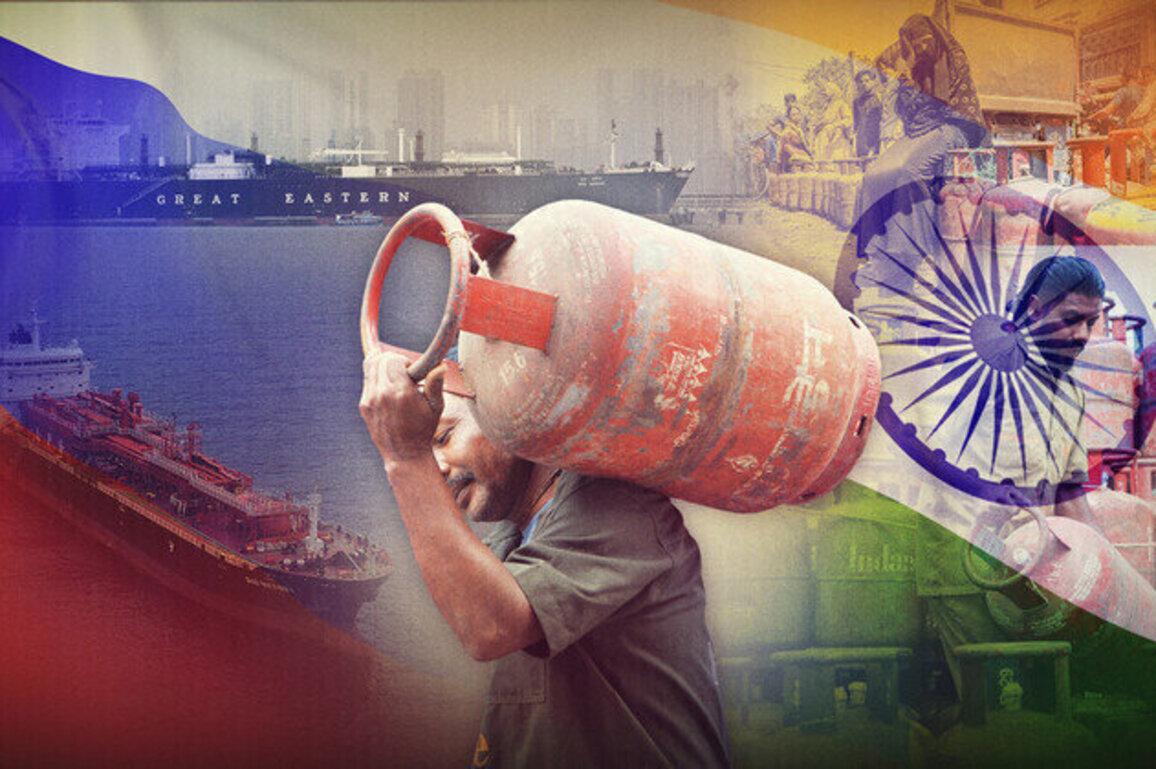
With 90% of imported cooking gas running through the Irancontrolled chokepoint and only 15 days of storage, New Delhi is testing Baltic and Pacific routes
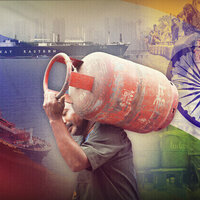
The liquefied petroleum gas (LPG) shortages that India faces as a result of the Middle East conflict have highlighted the need to strengthen the resilience of the nation's most politically sensitive fuel.
Data from thePetroleum Planning and Analysis Cell(PPAC) shows that LPG consumption reached 31.32million tonnes in 2024-25, while domestic production was 12.79million tonnes. This means that close to 60% of demand was met by imports, most of which transit through the conflicthitStrait of Hormuz.
When flows through this corridor were disrupted, India's LPG supply chain came under immediate strain. Arrivals fell sharply, March imports dropped to1.19 million tonnes, a 46% decline, triggering spillovers into the domestic economy.
The government moved swiftly to prioritize household consumption while tightening supplies to industry, even as limited storage, barely2-3 weeksof demand, narrowed the response window. New Delhi simultaneouslyinvoked emergency measuresto maximize refinery LPG output, with domestic production rising by roughly40%in early March and scrambled for cargoes from alternative suppliers such as the US and Norway.
In this reshuffle,Russia, already India's largest crude supplier, has emerged as a marginal LPG source. The key constraints, however, are limited volumes and complex logistics.
India's structural LPG dependence
India'sLPG importshave risen steadily, from 14.81million tonnes in 2019-20 to 20.67million tonnes in 2024-25 following the expansion of cleancooking access and rising consumption. Over the same period,domestic productionhas remained broadly flat at around 12-13million tonnes, even asconsumptionincreased from 26.33million tonnes to 31.32million tonnes. As a result, imports have absorbed most of the incremental demand, pushing their share to around twothirds of total consumption.
Efforts to diversify supply were already underway before the crisis, most notably through India's longtermLPG supply agreement with the US, securing around 2-2.2million tonnes annually from 2026. However, the current disruption shows that diversification remains partial and depends on freight costs and vessel availability.
The crisis has also exposed a weaker link in India's LPG chain of limited storage capacity. PPAC's latestLPG Profile Reportputs total LPG tankage at about 1.2million tonnes, equivalent to roughly 15 days of national demand. Bottling plants on average hold only around six days of stock, so even shortlived disruptions leave policymakers with little room for maneuver and quickly amplify external shocks.
Russian routes: UstLuga, Vladivostok, and the NSR
Reports suggest that India increasingly securesLPG cargoes from Russia and Japanas well as the US. Given that India consumes2.6million tonnes of LPG a month, around 80,000-90,000 tonnes a day, even several alternative cargoes, typically 40,000-60,000 tonnes each, cover only a few days of national demand. Initial Russian and Japanese supplies are therefore strategic hedges, not gamechangers.
But diversifying suppliers is not the same as diversifying routes. That is why Russia and longerrange corridors such as theNorthern Sea Routeand the proposedChennai-Vladivostok maritime corridorhave entered the policy debate as they offer route diversity when the Middle East is on fire.
On Russia's side, the main LPG export gateway is the Baltic port ofUstLuga, where the Sibur terminal handles liquefied gas. In 2024-25, industry reports indicated thatLPG exports from UstLugaroughly doubled yearonyear over January-May 2025 as European buyers retreated and exporters pivoted to Asia, and shipping intelligence noted at least two Indiabound cargoes totaling about 40,000 tonnes once flows resumed.
Indian strategists see two broad corridors for these volumes. A western route runs from the Baltic or Black Sea through theMediterranean,Suez CanalandRed Seainto the Arabian Sea, bypassing Hormuz but adding exposure atSuezandBabelMandeb; deliveries to Kochi, Mangaluru, or Jamnagar would take around 40 days or more.
An eastern route departs fromRussia's Far East around Vladivostok, passes through the Sea of Japan, the East and South China seas, and theStrait of Malacca, and then across the Bay of Bengal to India's east coast, reaching Haldia, Paradip, or Ennore in12-24 days. This corridor concentrates risk in Malacca, crowded with container traffic and lying underChinese naval shadow, but it fits India's broader IndoPacific calculus if eventually anchored in a formal Chennai-Vladivostok link.
For now, talk of theNorthern Sea Route as an energy lifelineis more ambitious than a nearterm solution. Harsh ice conditions, the small fleet oficeclass tankers and LNG carriers certified for Arctic operations, high insurance premiums, and sanctions on keyRussian Arctic oil and gas projectslimit the commercial viability of NSRbased LPG trades in the near term.
Even with record traffic of about38million tonnes in 2024, total NSR cargo is still a fraction of the hundreds of millions of tonnes moving through theSuez Canaleach year, which is why most analysts see it as a niche supplement rather than a realistic replacement for existing routes.
Yet both capitals are clearly intent on keeping theVladivostok-Chennai Eastern Maritime Corridoron the table as an option, with Indian ministers describing it as operational and highlighting its early role in carrying crude and other bulk cargoes between Russia's Far East and India's east coast.
Map is for illustrative purposes only.
RT / RT
Security premium, signaling and political calculus
Russia's role as a swing supplier is about redrawing risk, not replacing the Gulf. India imported around20.67million tonnesof LPG in 2024-25, implying an import requirement of 1.7-1.9million tonnes per month and leaving overseas supplies to meet the bulk of domestic demand. Even under optimistic assumptions, Russia's incremental export capacity can cover only a small share of this requirement, broadly comparable to the eventual scale of India's longterm LPG arrangement with the United States, so alternative suppliers can buffer shocks but not substitute the Gulf.
The value of Russian LPG therefore lies in geography and signaling rather than volume. Cargoes arriving via UstLuga through Suez, or via Vladivostok and Malacca, are by definitionnonHormuz flows, and even incremental nonGulf volumes shift India's risk calculus when set against the growing share of crude now imported on routes that bypass Hormuz, as highlighted in recentshipping data and official statementson diversification. The question is whether NewDelhi will pay a modest route premium for this security, just as it accepts extra miles to tap discounted Russian crude or continue to fall back on crisistime improvisation.
There is also a domestic political dimension. LPG is the flagship symbol of the government'scleancooking drive, and a prolonged shortage would be far more electorally damaging than a technical disruption in refinery crude runs. This is whyofficial communicationsduring the crisis have stressed refinery output rampups and diversified sourcing, amplified by images ofVLGCs discharging LPGat Indian ports, alongsiderepeated assurancesthat people's fuel needs will be met.
For policymakers, the strategic choice is how much to invest in tanks at home versus miles at sea, whether to expand LPG storage or pay a premium for Russian and other nonHormuz cargoes, since Russia cannot replace the Gulf but, via routes from UstLuga through Suez and from Vladivostok through Malacca, does give NewDelhi a way to recast supply risk beyond West Asia.
For Moscow, stepping in as a dependable swing supplier, even at modest volumes, cements its image in India as a longterm energy partner rather than a crisistime outlier.
(RT.com)